
IV
THOMAS BOSTON’S TEXT
I
 A WINDING, zig-zag path ascends the steep green hill beside the stream; and an elderly man, somewhat bent, and leaning heavily upon his stick, is toiling slowly and painfully up the slope. He pauses, partly to take breath and partly that he may turn and survey the exquisite panorama of emerald woodland and sparkling stream. But the grandeur of the silent hills, the perfume of the tossing hyacinths, the chirping of the grasshoppers at his feet, and the haunting laughter of the silvery stream below, all fail to gladden him to-day. The beauteous landscape of leafy wold and laughing water is bathed in radiant sunshine; yet for him the skies are gray and the earth is wrapped in gloom. His countenance is sad and pensive, for he is conjuring up the memories of happier days. He is thinking of those whom he has loved long since and lost awhile. He knows that this must be his final visit to the enchanting valley that has inspired some of his tenderest poetry. For this is William Wordsworth. He has written ‘Yarrow Unvisited,’ ‘Yarrow Visited,’ and ‘Yarrow Revisited’, and now he has come to take a last lingering farewell of the lovely place. He thinks of those in whose sweet society he first explored its flowery fields and forest paths — thinks especially of two. He thinks of Dorothy, his sister, with whom he walked, hand in hand, along these soft and grassy banks in the days of long ago. He owes everything to Dorothy. It was Dorothy who made him a poet. And now Dorothy is ill, so ill that she can never really recover! Then, turning to the east, he shades his eyes with his hand and looks wistfully towards Abbotsford. For it was Sir Walter Scott who first welcomed him to this delightful spot. Only a few months ago they rambled through these woodland paths together. And now Scott is dead! He who was the life and soul of this romantic countryside will climb its hills and ford its streams no more! To Wordsworth, the rugged slopes and the wooded valleys, the waving grasses and the murmuring torrent, are all lamenting the loss of one who loved them each so well. There are few things more affecting than to find the old familiar places, but to miss the old familiar faces. Wordsworth passes sadly over the crest of the hill to revisit the Yarrow vale no more. Scott is dead! This was in 1832.
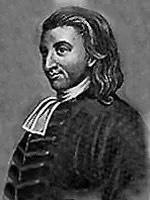
We will remain in this same delightful neighbourhood, but we will go back exactly a hundred years. Scott died in 1832. In 1732 an old minister whose manse stood just at the foot of yonder hill, lay dying. He has come to within a few days of his triumphant departure. But, although death is stamped upon his face, and it is known that he will never leave his bed again, it is announced that he will preach on Sunday, morning and evening, as usual! He orders his bed to be drawn up to the window, and prepares to address his people for the last time. Sunday comes. From all the farms and homesteads of that Selkirkshire countryside, ploughmen and shepherds, accompanied by their wives and children, set out early in the morning to hear their old minister’s last words. From all round the slopes of Ettrick Pen, from the distant foothills of Broad Law, from the lovely shores of St. Mary’s Lake, from all down the valleys of the Ettrick and the Yarrow, little groups of men and women make their way with heavy footsteps to the manse. The church at the foot of the knoll, the church with its quaint old tower, the church in which he has ministered for five and twenty years, is closed to-day. The dying man has turned his deathbed into a pulpit, and the whole countryside has gathered to listen to his last message. The eager multitude stretches far beyond the reach of his thin and wavering voice. But those who cannot hear can at least see his pale, wan face, and note the fire in his eye that even death is impotent to quench. As he sits, propped up by pillows, pleading with his people for the last time, the mountain breezes play with his thin, silvery hair. He exhausts the last atom of his failing strength as he pours out his soul in affectionate admonition and passionate entreaty. His voice falters ; the watchers round the bed gently remove the pillows that support him, and he lies prostrate, breathing heavily; the window is closed, and the great black crowd, breaking up into little groups again, melts sadly and silently away. In a few days it is tearfully whispered in every cottage that Thomas Boston is dead. So ended one of the most fruitful and memorable ministries that even Scotland has enjoyed. In 1732, as in 1832, there was sorrow in all that countryside. In 1732, as in 1832, the Valley of the Yarrow was a vale of tears.
III
Whenever I am inclined to pessimism, or am tempted to suppose that modern conditions preclude the possibility of a rich and fruitful ministry, I reflect on the conditions that beset poor Thomas Boston. On the self-same day that witnessed the union under one crown of the English and Scottish realms, on May Day, 1707, Boston settled at Ettrick. The church had but few members, and even these were of such a type that their behaviour was a reproach to the sanctuary. The poor minister, whose heart was still tender at leaving his first people, was horrified to find that his new parishioners could scarcely speak without profanity, and were addicted to lives of the grossest immorality. Their sins, moreover, were absolutely shameless. They were ‘smart and of an uncommon assurance, self-conceited and censorious to a pitch.’ Even when they came to church, their conduct was disorderly and indecent to the last degree. Many of them loitered about the churchyard, arguing and brawling whilst worship was proceeding; and elders had to be told off to keep order both inside and outside of the building. It was three years before Mr. Boston would allow the Lord’s Supper to be observed among them. ‘I have been much discouraged with respect to my parish a long time,’ he says in his Memoirs, ‘and have had little hand or heart for my work.’ For twenty-five years, however, he ministered incessantly to this people. He visited them all in their homes; pleaded with them each in secret; invited the heads of the household to the manse, and taught them how to conduct family worship. After three years he was sufficiently assured of the sincerity of a handful of his people to admit them to the Lord’s Table. Five years later, he is delighted at finding that he has a hundred and fifty devout communicants. Later still, he witnesses the most surprising spectacle in this same valley. People come in streams from far and near to be present at the Communion Service at Ettrick. ‘It often reminded him of the Jewish Pilgrims in Old Testament times ascending in companies to Jerusalem to keep their Passover.’ When the sacred season came round he had to call in other ministers to help him dispense the mystic symbols. The wilderness had become a fruitful field. The Ettrick manse was every week the resort of eager penitents, who, beholding with amazement the transformation in so many lives around them, were anxious to catch the holy contagion. In every house, family worship sanctified the opening and sweetened the close of each succeeding day. And the old church under the hill was, to hundreds and hundreds of people, the dearest spot that eyes had ever seen.
IV
Did I say that, when they withdrew the bed from the window, and the dying minister turned his face to the wall, his memorable ministry ended? If so, it was a slip of the pen, and an unpardonable slip at that. It is every man’s duty to provide himself with some honest work that he may do when he is lying in his grave. Boston did; for, when the ministry of his lips ended, the ministry of his pen began. For years after his death, Thomas Boston’s books were the most popular and most powerful works in Scotland ; and, by means of them, the fragrance that had for so long filled the Ettrick Valley was wafted far and wide. Whilst Thomas Boston was lying in his grave, his influence was growing by leaps and bounds. Speaking of one of the books. The Fourfold State, Dr. Andrew Thomson, in his Introduction to Boston’s Life and Times, says that within a quarter of a century after its publication, it had found its way and was eagerly read and pondered, over the Scottish Low-lands. ‘From St. Abb’s Head to the remotest point in Galloway it was to be seen side by side with the Bible and Bunyan on the shelf in every peasant’s cottage. The shepherd bore it with him, folded in his plaid, up among the silent hills; the ploughman in the valleys refreshed his spirit with it, as with heavenly manna, after his long day of toil. The influence, which began with the humble classes, ascended like a fragrance into the mansions of the Lowland laird and the Border chief, and carried with it a new and hallowed joy.’ And, on the authority of one who lived nearer to Boston’s time, he says that for three generations this book was the instrument of more numerous conversions and more extensive spiritual quickening than any other volume he could name. And has not Dr. Thomas McCrie, one of the greatest authorities on Scottish life and literature, who was himself born in the same little Border town in which Boston first saw the light, spoken of The Fourfold State as a book that has contributed more than any other work to mould the religious sentiments of the Scottish people?
Now, where was this lamp lit, and by what flame was it kindled? From infancy Boston was taught to take religion seriously. Had not his father endured imprisonment for conscience’ sake, and had not Thomas, as a little boy, sat with him in his cell to help relieve his loneliness? But when the lad was twelve years of age, the Rev. Henry Erskine, a name that must always hold a charm to Scottish folk, came into the Border Country and began to preach. From every direction people flocked to hear him. John Boston went, taking little Thomas with him. They were deeply moved, and went again. Then, one never-to-be-forgotten day, Mr. Erskine cried out, ‘Behold the Lamb of God that taketh away the sin of the world! Behold the Lamb of God that taketh away the sin of the world!’ What mountainous words!
The Lamb! …. The Sin!
God! …. The World!
The Lamb of God!
The Sin of the World!
The Lamb that taketh away the Sin!
‘By this,’ says Boston, ‘I judge God spake to me. I know I was touched to the quick at the first hearing, wherein I was like one amazed with some new and strange thing. Sure I am I was in good earnest concerned for a saving interest in Jesus Christ. My soul went out after Him, and the place of His feet was glorious in mine eyes.’
VI
The day on which that stupendous pronouncement was first made was the day on which the slow evolution of prophecy reached its culmination and its climax. In the gray dawn of history a youth had climbed Mount Moriah, walking by his father’s side, asking as he walked one pertinent and tragic question : ‘My father, behold the fire and the wood, but where is the lamb for the burnt offering?’
‘Where is the Lamb?’
‘Where is the Lamb?’
The question, once started, echoed down the ages from generation to generation. For twenty centuries it haunted the hearts of men. And then, one day, the people were assembling at Jerusalem for the Passover, the Feast of the Lamb that was Slain. The thought of sacrifice, and especially of the sacrifice of the Lamb, was in every mind. And, as they flocked together to listen to the preaching of a strange, prophetic figure from the desert, the speaker caught sight of a Face in the crowd, a Face such as earth had never seen before. And, forsaking the beaten track of his discourse, he cried out: ‘Behold the Lamb of God that taketh away the sin of the world!’ The riddle of the ages was read at last!
‘Where is the Lamb?’
‘Where is the Lamb?’
‘I once stood in the valley of the Rees River at the head of Lake Wakatipu,’ says Dr. Rutherford Waddell, ‘and looked up at the great glacier heights of Mount Earnslaw. Far away up across the mountain brow innumerable rills and streams of water were pouring like silver bars down towards the pine forests that climb the mountain-side. Across vast widths of snow and ice they converged their multitudinous rills; and by the time they had reached the forests they had united their streams into one great torrent. This comes tumbling down, forming the beautiful Lennox Waterfall, and then, leaping forth, it hurries away hence to the plain, singing the song of liberty and life. So all the diverging streams of ancient thought and Hebrew prophecy meet in one great announcement. The long evolution of the ages finds its culmination at last in a living Person: “Behold the Lamb of God that taketh away the sin of the world!” Boston heard Erskine repeat that stupendous declaration in a little Border town, and all his heart stood up to greet its deep and awful significance.
VII
But what is that profound significance? The Lamb ! The Lamb of God! The Lamb that taketh away the Sin! What does it mean? The Lamb stands for two things, two and no more. It is the symbol of Innocence, and it is the symbol of Suffering. These two factors in human experience — Innocence and Suffering — are united in the symbolism of the lamb; and they are united in the eternal scheme of things. For the dark tragedy of human guilt passes through two stages. There is the preliminary stage: the stage in which the guilt of the Guilty is the torture of the Innocent — the father heartbroken at his daughter’s shame; the mother weeping over the excesses of her dissolute boy. And there is the subsequent stage, the stage in which the innocence of the Innocent is the torture of the Guilty — Legree tormented by the lock of his mother’s hair; Dombey racked in the day of his ruin by the fact that ‘every loving blossom he had withered in his innocent daughter’s heart was snowing down in ashes on him.’ The first of these principles — the torture of the Innocent by the guilt of the Guilty — led to Redemption. The second of these principles — the torture of the Guilty by the innocence of the Innocent — leads to Repentance. The first led the Son of the Highest to become the Lamb of God; the second led to the transformation in the soul of Boston when the great revelation burst upon him.
VIII
The startling proclamation that had so captivated his own heart became the keynote of Boston’s historic and epoch-making ministry. ‘From the time of my settling here,’ he says, ‘the great thing I aimed at in my preaching was to impress the people with a sense of their need of Christ.’ In his later years Boston became convinced that a good sermon ought to be frequently repeated. He himself preached one sermon again and again and again. Its text was: ‘Behold the Lamb of God that taketh away the sin of the world!’ And when the people gathered that Sunday under the bedroom window to hear his dying message, he still urged them with many tears to fix their eyes and their affections upon the Lamb of God. When Boston’s sun was setting in Scotland, Wesley’s was rising in England. It was in those days that Charles Wesley sang:
Happy, if with my latest breath
I may but gasp His name;
Preach Him to all, and cry in death,
‘Behold, behold the Lamb!’
And whilst, in England, Charles Wesley coveted for himself so sublime an experience, Thomas Boston, in Scotland, actually tasted its felicity.
Dr. F. W. Boreham




![Navigating Strange Seas, Part 1, "ENGLAND" - Available to watch online as a rental or to buy digitally or as a DVD [more]](https://fwboreham.com/wp-content/uploads/2019/01/fwb-digital-download-part01.png "Navigating Strange Seas, Part 1, \"ENGLAND\"")
![NAVIGATING STRANGE SEAS, Part 2 - "NEW ZEALAND" - Available to watch online as a rental or to buy digitally or as a DVD [more]](https://fwboreham.com/wp-content/uploads/2019/01/fwb-digital-download-part02.png "NAVIGATING STRANGE SEAS, Part 2 - \"NEW ZEALAND\" - Available to watch online as a rental or to buy digitally or as a DVD [more]")
![NAVIGATING STRANGE SEAS, Part 3 - "HOBART" - Available to watch online as a rental or to buy digitally or as a DVD [more]](https://fwboreham.com/wp-content/uploads/2019/01/fwb-digital-download-part03.png "NAVIGATING STRANGE SEAS, Part 3 - \"HOBART\" - Available to watch online as a rental or to buy digitally or as a DVD [more]")
![NAVIGATING STRANGE SEAS, Part 4 - "MELBOURNE" - Available to watch online as a rental or to buy digitally or as a DVD [more]](https://fwboreham.com/wp-content/uploads/2019/01/fwb-digital-download-part04.png)
0 Comments