
home > books by FWB > 1920, A Bunch of Everlastings > .Chapter 3, Sir John Franklin’s Text
III
SIR JOHN FRANKLIN’S TEXT
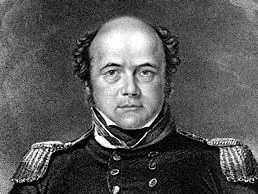 A HEAP of books and bones — and that was all! One after another, no fewer than forty intrepid navigators had invaded the awful solitudes of the Arctic seas in quest of some trace of Sir John Franklin and his gallant men; and this was the tardy and the meagre reward of those long, long years of search! On the snow-bound coast of a large but inhospitable island, Sir Francis McClintock discovered an overturned and dilapidated boat. Underneath it, together with a few guns and watches, they found a collection of bones and of books. The men had been more than ten years dead. Sir John Franklin, it was known, from documents found elsewhere, had died upon his ship. His last moments were cheered by the knowledge, which came to him just in time, that the expedition had been successful, and that the long-dreamed-of North-West-Passage had been proved to be a fact. The other members of the expedition, more than a hundred and twenty men, had made an attempt to save their lives by an overland dash. The natives had seen that shadowy and wavering line of wanderers. They were very thin, the Eskimos said, and could with difficulty stagger along. With every mile, some fell out and lay down in the snow to die. Others, according to an old native woman who met them, seemed to die upon their feet, and they only fell because death had already overtaken them. But, of all the members of the Franklin expedition, these were the first whose bones were actually found. And, with the bones, some books! It was the bones that principally interested their discoverers: it is the books that must principally interest us. For some of these saturated and frozen volumes were once the personal property of Sir John Franklin. Do they not still bear his name ? One of them is a battered copy of Dr. John Todd’s Student’s Manual. Sir John has turned down a leaf in order to mark a passage that appears on almost the last page of the book.
‘Are you not afraid to die?’
‘No!’
‘No ! Why does the uncertainty of another state give you no concern?’
‘Because God has said to me: “Fear not; when thou passest through the waters, I will be with thee; and through the rivers, they shall not overflow thee!”’
There, as though his frozen finger pointed to it, stands Sir John Franklin’s text.
II
‘The waters! The waters!’
‘The beckoning, challenging waters!’
‘When thou passest through the waters!’
From his earliest boyhood the waters had called him. He lived in an inland town: his parents designed him for the church: he was to be a bishop, so they said ! But a holiday at the seaside makes all the difference. He walks up and down the sands looking out on the infinite expanse of water. He climbs the broken cliffs, and shading his eyes with his hand, watches the great ships vanish over the distant skyline. The unseen taunts his imagination: it alters the whole course of his life. The sight of the sea awakens a tempest of strange passions in his soul. Distant voices call him and distant fingers beckon. To be a sailor! To be the first that ever burst into some silent sea! His fancy catches fire at the very thought of it!
The waters! The waters!
The call of the waters!
‘When thou passest through the waters!’
He yields himself to the impulse that he scarcely has the power to resist. He gives himself to the waters, and he learns the business of seamanship from the most distinguished masters of all time. With Matthew Flinders, the most audacious and the most unfortunate of our Australian explorers, he circumnavigates this great continent; whilst at Copenhagen and Trafalgar he fights beneath ‘the greatest sailor since the world began,’ He makes friends, too, with men who have sailed with Captain Cook, from one of whom, Sir Joseph Banks, he catches the inspiration that sends him cruising into Arctic seas. But whether in peaceful exploration or amidst the excitements of war, whether in the sunny South or in the frigid and desolate North, he is for ever listening to the voices of the waters. He knows what the wild waves are saying. They are calling him to come. And he obeys. For in his heart he cherishes a wonderful secret. The unknown waters are not as lonely as they seem.
The shining tropical waters!
The frozen polar waters!
The unseen, unsailed waters!
‘When thou passest through the waters, I will be with thee!‘
The delightful eyes of Franklin behold a sea of significance in that.
III
A dauntless explorer and a brilliant discoverer was Franklin, but by far the most fruitful discovery of his adventurous life was made in 1820, He was then in his thirty-fifth year, and was undergoing his first experience of the ice-bound North. He was in charge of the overland section of the expedition, and was compelled to winter at Fort Enterprise, a desolate spot half way between the Great Bear Lake and the Great Slave Lake. It was a weird experience — so cold, so dark, so still! In a letter to his sister, written from this outlandish solitude, he speaks of the astonishing way in which, during the intense Arctic silence, his Bible breaks with new beauty upon him. It is not the same book. The surprises grow in novelty and wonder every day. Everything in the sacred volume, and especially the central story — the story of redeeming love — acquires a new glory in his enraptured eyes. In this hushed wilderness of snow and ice, he has abundant time for thought. Such serious reflection, he says, must soon convince a sinner of his guilt, of his inability to do anything to save himself, and of his urgent need of deliverance. ‘If, under this conviction, he should enquire, “How, then, can I he saved?” would it not be joy unspeakable for him to find that the gospel points out the way? Christ who died for the salvation of sinners is the Way, the Truth and the Life. Whoso cometh unto Him in full purpose of heart shall in no wise he cast out. Can anything be more cheering than these assurances, or better calculated to fill the mind with heavenly impressions and lift up the heart in grateful adoration to God?’
‘How, then, can I he saved?’
‘I am the Way, the Truth, and the Life. Him that cometh unto Me I will in no wise cast out.’
He has heard the call of the waters; and on his very first venture into the cold and silent North, he has discovered this! He has found, not only a Saviour, but a Friend. He has received the assurance, on whatever seas he sails, of a divine Presence, a sacred Comradeship; and, to the end of his life, he never ceased to prize it.
IV
The saint is never cast in a mould: no two are alike. On my desk at this moment lie two books side by side. One is the Life of Sir John Franklin, the other is Brother Lawrence’s Practice of the Presence of God. Can any greater contrast be imagined? Here are two types of saintliness: neither appears to have anything in common with the other. For one man is a monk : the other is a mariner. The one is a recluse, moving among the cells and cloisters of a Carmelite Monastery: the other travels over all the continents and sails into all the seas. The one is essentially an ascetic: the other is essentially a man of the world. The one is pale and thin and sad: the other is bluff and bronzed and jolly. And yet I am impressed at this moment, not by the contrast, but by the similitude. Let us look for a moment beneath the trappings alike of the monk and of the mariner; and, in each case, let us search the soul of the man.
‘I have quitted all forms of devotion,’ says Brother Lawrence, ‘but those to which my state obliges me. And I make it my business only to persevere in His holy presence. I am assured beyond all doubt that my soul has been with God above these thirty years. Were I a preacher, I should above all other things preach the practice of the presence of God; and, were I a director, I should advise all the world to it, so necessary do I think it, and so easy, too. I cannot imagine how religious persons can live satisfied without the practice of the presence of God: while I am with Him I fear nothing, but the least turning from Him is insupportable.’
Now, had I not revealed the source of these words, nobody could have told whether I had copied them from the conversations of the monk or from the journal of the mariner. They fell from the lips of Brother Lawrence; but they might just as as easily have occurred in the correspondence of Franklin. For it was the joy of Franklin’s life, and the comfort of his death, that he could never be alone. ‘When thou passest through the waters,’ the promise said, ‘I will he with thee’; and he believed it. The thought runs through all his farewell letters. His leave-taking reminds one of Enoch Arden’s.
Keep everything shipshape, for I must go!
And fear no more for me; or, if you fear,
Cast all your cares on God ; that anchor holds!
Is He not yonder in those uttermost
Parts of the morning? If I flee to these,
Can I go from Him? And the sea is His,
The sea is His; He made it!
On the night before the ships sailed on that last fatal voyage, he expressed his confidence in the divine care; in all the blunt sailor-sermons that he preached to his officers and men amidst the ice, the same thought was always uppermost; and the book, with the leaf turned down at the text, shows that his confidence held out to the last.
The white, white waters!
The cruel and pitiless waters!
The all-engulfing waters!
‘When thou passest through the waters, I will be with thee!’
In life, and in death, that anchor held!
V
Yes, the anchor held; but the strain upon it was at times terrific. What test, for example, can be more severe than the test of slow starvation? And, more than once, Franklin’s faith was subjected to that terrible ordeal. The ragamuffins in the London streets used to call Franklin ‘the man who ate his own boots,’ and he lived to laugh with them at the joke; but it was grim enough experience at the time. The horror of it invaded his sleep for years afterwards. They are out amidst the snowy vastnesses of the interior when the food fails. They divide into two parties: Franklin leads the stronger men in an attempt to find provisions, whilst Dr. Richardson remains to nurse the more exhausted members of the expedition. The foraging party has no success; and all are reduced to skeletons. Whilst Franklin and his companions are resting, Dr. Richardson and a seaman of his party come spectrally upon them. They are the only survivors of the group left at the camp! All are soon too feeble to move. In their extremity a herd of reindeer trot by; but the men are too exhausted to fire! Franklin remembers the promise, and, with thin and wavering voice, leads the party in prayer. And this is the next entry in his journal:
‘Nov. 7, 1 82 1. Praise be to the Lord! We were this day rejoiced at noon by the appearance of Indians with supplies!’
‘ Old Franklin,’ so wrote a midshipman to his friends at home, ‘old Franklin is an exceedingly good old chap and very clever. We are all delighted with him. He is quite a bishop. We have church morning and evening on Sundays, the evening service in the cabin to allow of the attendance of the watch that could not be present in the forenoon. We all go both times. The men say they would rather have him than half the parsons in England.’
For, after all, there is no eloquence like the eloquence of conviction, and out of the depths of a great and wonderful experience Sir John addressed his men.
The waters!
The wide, wide waters!
The waves on which the Lord was always walking!
‘When thou passest through the waters, I will be with thee!’
The cable often quivered, but the anchor held!
VI
‘When thou passest through the waters, I will be with thee!’
Franklin found the Lord walking on all the waters. Lying on my desk is an ancient map of the world which an old pilot showed to Henry the Seventh in the year 1500. One or two continents are missing, but there are ample compensations! For, all over the unexplored territory, I find written: ‘Here be dragons!’ ‘Here be demons!’ ‘Here be sirens!’ ‘Here be savages that worship devils!’ and so on. But, on his map of the world, Franklin wrote across all the unknown lands and all the uncharted seas, ‘Here is God!’ ‘When thou passest through the waters, I will be with thee!’ And he always found Him there.
‘When thou passest through the waters, I will be with thee!’
Who shall doubt that when, at last, he set out upon that strange voyage on unknown seas which, sooner or later, we must all undertake, he still found the promise true? When Lord Tennyson was asked to write an inscription for the monument in Westminster Abbey, he composed the lines that are recognised as one of the real adornments of the Abbey:
Not here! the White North hath thy bones, and thou,
Heroic Sailor Soul !
Art passing on thy happier voyage now
Towards no earthly Pole!
‘Passing!’
‘Passing on thy happier voyage!’
‘When thou passest . . . I will be with thee!’
Who, I say, can doubt the Presence Divine on those uncharted waters?
When, in 1875, at the age of eighty-three. Lady Franklin passed away, Dean Stanley added a postscript to Lord Tennyson’s inscription. It declared that the monument in the Abbey was ‘Erected by his widow, who, after long waiting and sending many in search of him, herself departed to seek and to find him in the realms of light.’
Thus, He who is with each of His voyagers when they sail upon strange waters brings them safely home and safely together; and, in the bliss of arrival and reunion, the fierce storms and the long separations are alike forgotten.
F. W. Boreham




![Navigating Strange Seas, Part 1, "ENGLAND" - Available to watch online as a rental or to buy digitally or as a DVD [more]](https://fwboreham.com/wp-content/uploads/2019/01/fwb-digital-download-part01.png "Navigating Strange Seas, Part 1, \"ENGLAND\"")
![NAVIGATING STRANGE SEAS, Part 2 - "NEW ZEALAND" - Available to watch online as a rental or to buy digitally or as a DVD [more]](https://fwboreham.com/wp-content/uploads/2019/01/fwb-digital-download-part02.png "NAVIGATING STRANGE SEAS, Part 2 - \"NEW ZEALAND\" - Available to watch online as a rental or to buy digitally or as a DVD [more]")
![NAVIGATING STRANGE SEAS, Part 3 - "HOBART" - Available to watch online as a rental or to buy digitally or as a DVD [more]](https://fwboreham.com/wp-content/uploads/2019/01/fwb-digital-download-part03.png "NAVIGATING STRANGE SEAS, Part 3 - \"HOBART\" - Available to watch online as a rental or to buy digitally or as a DVD [more]")
![NAVIGATING STRANGE SEAS, Part 4 - "MELBOURNE" - Available to watch online as a rental or to buy digitally or as a DVD [more]](https://fwboreham.com/wp-content/uploads/2019/01/fwb-digital-download-part04.png)
0 Comments