
home > books by FWB > 1961, The Last Milestone > Chapter 23 – A CATARACT OF BABIES
Chapter 23
A CATARACT OF BABIES
IT was on March 25, 1741, that Captain Coram, a plain, blunt old sea-captain, began a movement that has vitally affected every phase of human adventure and experience. Born in the days when Sir Christopher Wren was struggling to repair the havoc wrought by the Great Fire, and possessing no social or educational advantages of any kind, Thomas Coram became an ordinary able seaman. As a sailor he drifted about the world, making it his business to leave every country he touched the better for his visit. In Georgia, in Nova Scotia, and in Massachusetts he started movements for which, to this day, his name is held in honour; but al] these preliminary ventures were eventually put in the shade by the historic enterprise to which he applied his powers in his later days.
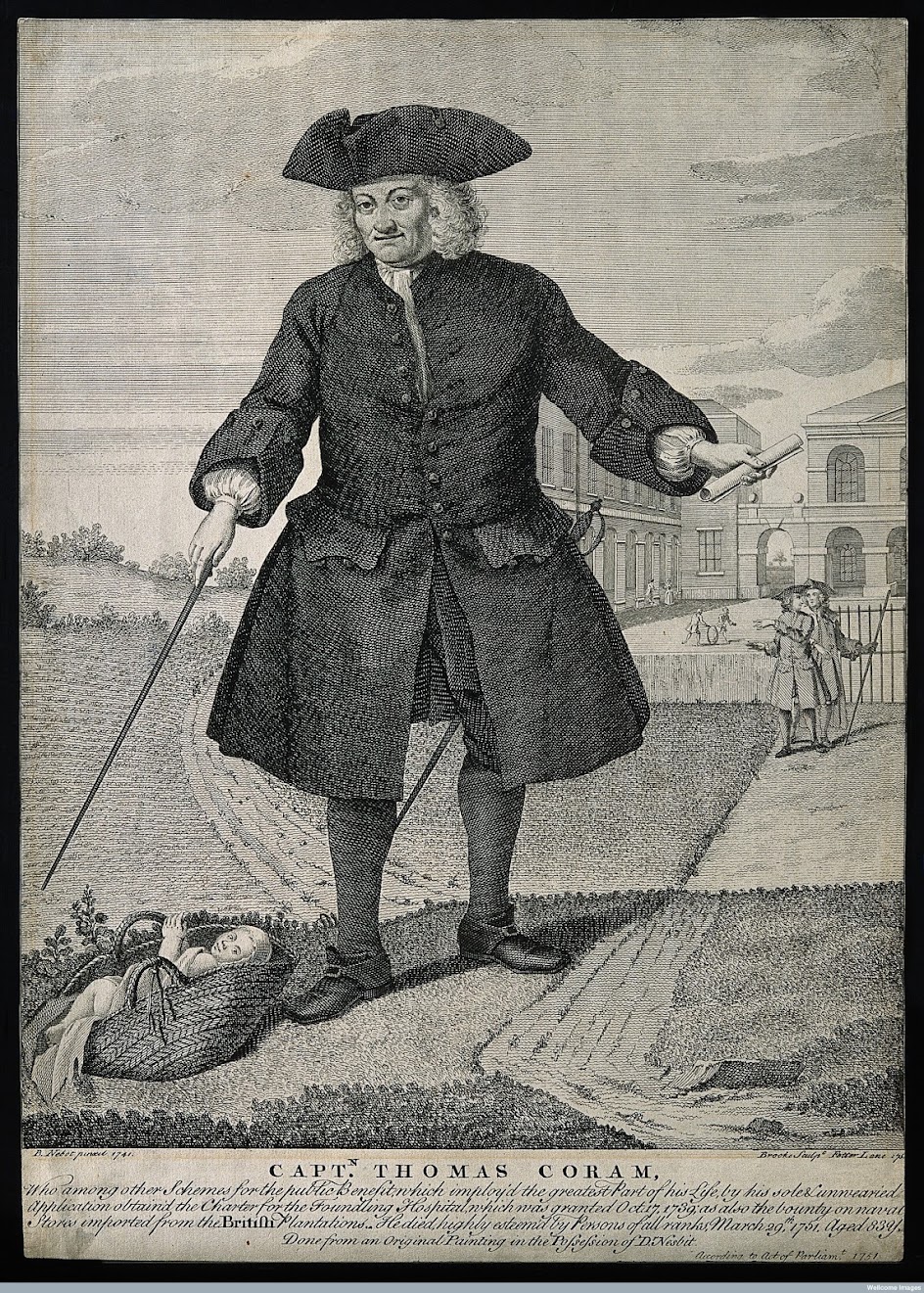 On retiring from the sea, he took rooms at Rotherhithe on the Thames-side, living just such a life as old sailors usually live. In taking his morning stroll, however, the good captain made a discovery that sickened and appalled him. He seldom returned to his quarters for his modest morning meal without having seen, lying in the gutter, one or more babies that, unwelcome and unwanted, had been disposed of in this crude and heartless way. Some of them were dead; some were emaciated and at their last gasp; but many were alive and in excellent condition. Captain Coram made up his mind that the abominable practice must be stopped.
He at first attempted to heal this open sore by taking one or two of the most promising of the children under his own care and by inducing other men and women to follow his example. But it soon became obvious that so immense a malady could never be cured by so puny a panacea; the matter was of national importance; the public conscience must be aroused. The people must be made to feel and to act. Captain Coram drew up a petition to Parliament. It is to the credit of the British people that, when a real need is brought under their notice, sympathies are swiftly stirred and practical assistance is cheerfully given. To Captain Coram’s delight, the Foundling Hospital of London was incorporated by Royal Charter ‘for the maintenance and education of exposed and deserted children’. But if Captain Coram imagined that, with this important step, all his problems had been solved, he was doomed to disillusionment.
 He soon discovered to his dismay that he had abolished one evil only to make room for another. In his Eighteenth Century Vignettes, Mr. Austin Dobson has tellingly depicted the confusion of the founder of the hospital as soon as its doors were, for the first time, opened. Once the existence of the institution became known, babies poured in from every corner of the kingdom. It became a lucrative trade, Mr. Dobson says, for carriers to convey infants from remote hamlets and villages to Captain Coram’s hospital. On a single trip, one waggon brought eight to town, seven of whom were dead when they reached their destination. On another occasion, a man with five babies in baskets got drunk on the road and three of his unhappy charges were suffocated.
The inevitable outcome of all this was that the governors of the hospital found themselves utterly unable to cope with the battalions of babies that swooped down upon them from every point of the compass. They accordingly appealed to Parliament. Parliament voted them .£10,000, but, in making the grant, still further disconcerted them by stipulating that they must receive all comers. A basket was hung at the gate-way, on the very spot that the Coram statue afterwards occupied, and, on the first day of the appearance of this receptacle, 117 babies were dropped into it. In less than four years, 15,000 children were forwarded to the hospital, and the record grimly adds that ‘a vile trade grew up among vagrants of undertaking to carry children from the country to the hospital, an undertaking which was seldom performed, or performed only with great cruelty’. In the early years of the hospital’s existence, it was possible to coax only one child in every four into surviving the injuries and handicaps that had marked its condition when admitted.
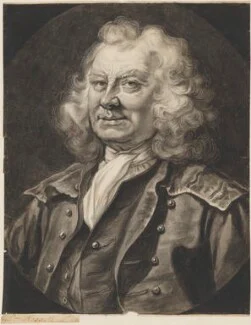
The institution, now housed at Berkhamsted, and still adorned by the noble statue of Captain Coram, still possesses many interesting links with the days of its stalwart founder. It treasures, for example, the organ presented to it by Handel in 1750, an instrument on which the eminent composer often played his ‘Hallelujah Chorus’. Handel was very much in love with the work that Captain Coram was doing. In the beautiful chapel which Jacobson added to the hospital in 1747, Handel formed a choir of blind inmates who frequently rendered ‘The Messiah’ under the composer’s own direction. And when, a few years later, Handel died, he bequeathed to the hospital a manuscript copy of his most magnificent oratorio. Hogarth, too, so much admired the unselfish and constructive work of Captain Coram that he painted for the hospital the imposing portrait of the captain, of which the institution is still inordinately proud. From this handsome canvas, as Mr. Dobson says, ‘the ruddy, kindly face of the brave old mariner, with its curling white hair, still beams upon us’. For some years the nation’s most brilliant artists arranged an annual exhibition of their paintings at the hospital; and it was this exhibition that led, in 1768, to the formation of the Royal Academy. At so many points does the sturdy personality of the old sea dog weave itself into our national story. Few men have done more than he to earn the grateful homage of their remote successors.
Dr. F. W. Boreham




![Navigating Strange Seas, Part 1, "ENGLAND" - Available to watch online as a rental or to buy digitally or as a DVD [more]](https://fwboreham.com/wp-content/uploads/2019/01/fwb-digital-download-part01.png "Navigating Strange Seas, Part 1, \"ENGLAND\"")
![NAVIGATING STRANGE SEAS, Part 2 - "NEW ZEALAND" - Available to watch online as a rental or to buy digitally or as a DVD [more]](https://fwboreham.com/wp-content/uploads/2019/01/fwb-digital-download-part02.png "NAVIGATING STRANGE SEAS, Part 2 - \"NEW ZEALAND\" - Available to watch online as a rental or to buy digitally or as a DVD [more]")
![NAVIGATING STRANGE SEAS, Part 3 - "HOBART" - Available to watch online as a rental or to buy digitally or as a DVD [more]](https://fwboreham.com/wp-content/uploads/2019/01/fwb-digital-download-part03.png "NAVIGATING STRANGE SEAS, Part 3 - \"HOBART\" - Available to watch online as a rental or to buy digitally or as a DVD [more]")
![NAVIGATING STRANGE SEAS, Part 4 - "MELBOURNE" - Available to watch online as a rental or to buy digitally or as a DVD [more]](https://fwboreham.com/wp-content/uploads/2019/01/fwb-digital-download-part04.png)
0 Comments